
Why Generic CRM Software Fails Cleaning Businesses
Most software wasn't built for the way cleaning companies actually work
- Publication date
- Reading time
- 4 min read
- Author
- The NOVATRADE SOLUTIONS Team
The best products are not built around assumptions. They are built by understanding the people who will use them.
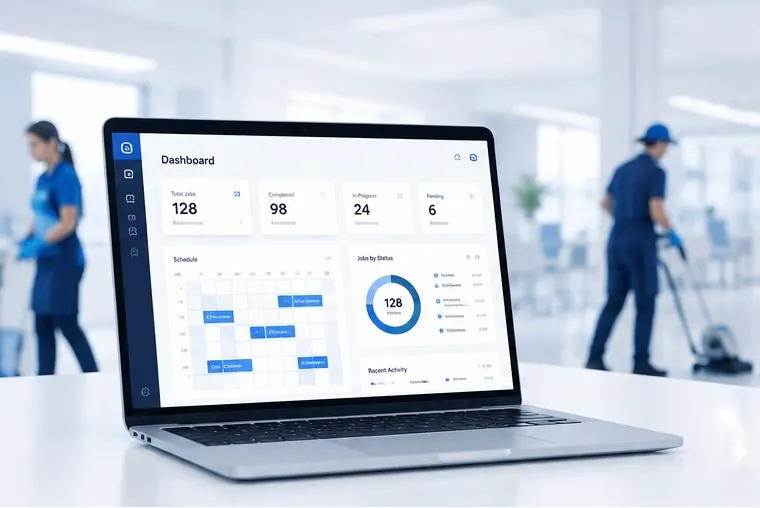
Introduction
Running a cleaning business has never been simple. Every day begins with a schedule, but rarely ends the way it was planned. An employee calls in sick. A client requests a last-minute change. A supervisor needs to complete an inspection. An invoice is still waiting to be sent, while another customer is asking where their cleaning team is.
For many companies, this isn't an exceptional day — it's simply business as usual.
Despite the rapid growth of business technology, many cleaning companies still rely on spreadsheets, messaging apps, shared calendars, handwritten notes, and generic CRM systems to manage their operations. These tools may work in the early stages of a business, but as teams grow and client expectations increase, they often become the biggest obstacle to efficiency.
The problem isn't a lack of effort. The problem is that the technology was never designed for the way cleaning businesses actually operate.
Cleaning Businesses Are Different
Most CRM platforms were originally created for sales organizations. Their primary goal is to manage leads, sales pipelines, and customer relationships.
Cleaning companies operate in a completely different environment.
Every day involves coordinating mobile teams, managing recurring services, handling last-minute schedule changes, tracking quality inspections, monitoring inventory, communicating with field employees, and ensuring every client receives consistent service.
These are not additional features.
They are the foundation of the business.
When these essential workflows are spread across multiple applications, managers spend more time switching between tools than actually managing operations.
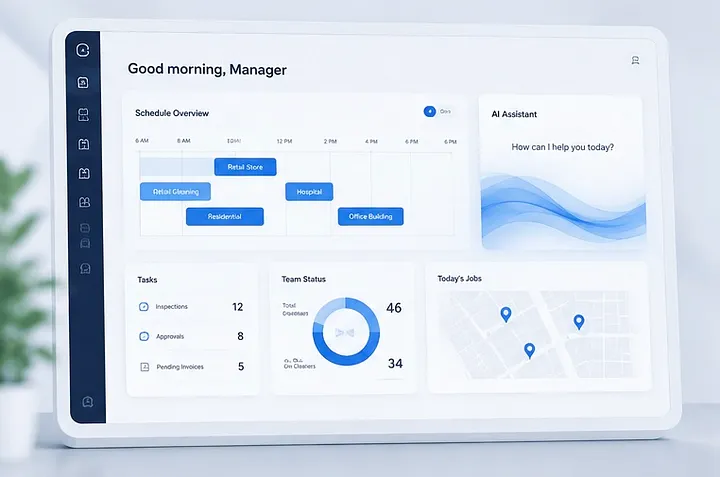
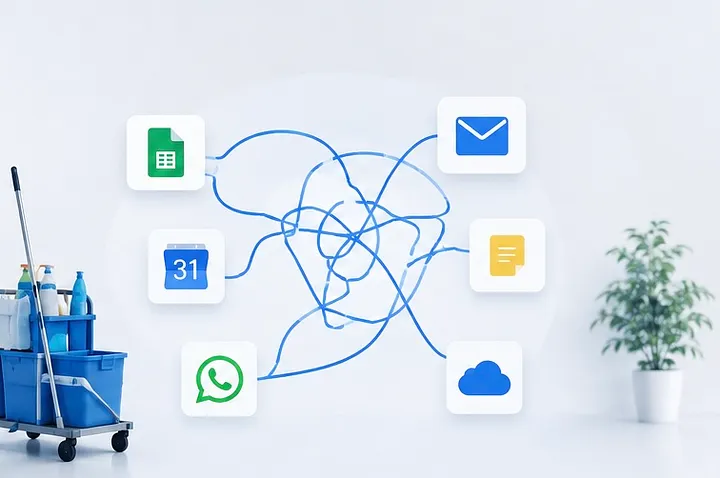
The Hidden Cost of Disconnected Systems
Using several different applications might seem manageable when a business is small.
A spreadsheet tracks employees. A calendar manages appointments. Messages arrive through a messaging app or email. Invoices are created in accounting software. At first glance, everything appears organized. But as the business grows, every additional client, employee, and recurring contract increases complexity.
Managers spend hours updating schedules manually. Employees receive conflicting information. Customer requests take longer to answer. Reports require data from multiple sources. Invoices are delayed.
Small operational issues gradually become larger business problems. Eventually, the biggest limitation isn't finding new customers.
It's managing the business efficiently enough to support continued growth.
Growth Should Create Opportunities — Not Chaos
Every successful cleaning company reaches a point where the systems that supported early growth begin slowing it down.
Growth means more employees. More customers. More recurring services. More inspections. More communication. More administration.
Without connected operational software, expansion often creates unnecessary stress instead of new opportunities.
Technology should make growing easier — not more complicated.
The Industry Is Changing
Across the cleaning industry, businesses are beginning to rethink how they manage their operations.
Artificial intelligence is helping managers access information instantly instead of searching through multiple systems. Automation is reducing repetitive administrative tasks. Mobile applications are keeping field teams connected in real time. Digital inspections are replacing paper checklists. Reports that once required hours of manual work are now generated automatically.
This transformation isn't simply about adopting new technology. It's about building businesses that are more organized, more responsive, and better prepared for future growth.
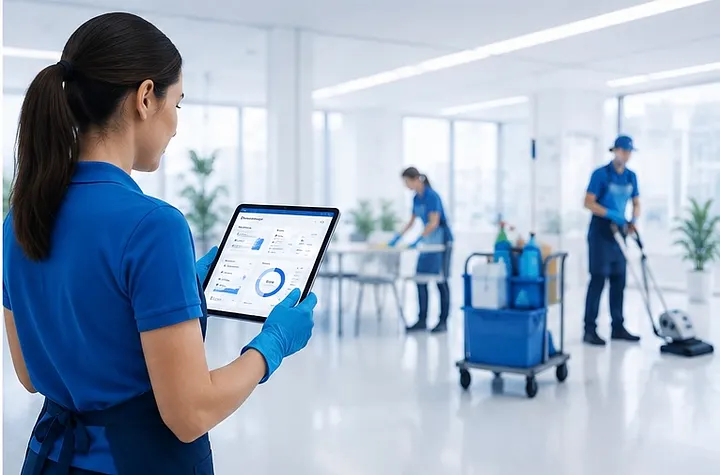
Software Should Adapt to Your Business
Every industry has unique operational requirements. Construction companies use construction management software. Medical practices rely on healthcare platforms. Restaurants operate specialized restaurant management systems. Cleaning companies deserve technology designed specifically for the way they work.
Instead of forcing businesses to adapt to generic software, modern platforms should adapt to real operational workflows.
Scheduling. Employees. Clients. Quality control. Finance. Reporting. Artificial intelligence.
When these elements work together inside one connected system, daily operations become simpler, communication improves, and managers gain complete visibility across the business.
Looking Ahead
Customer expectations continue to rise.
Businesses are expected to respond faster, communicate more clearly, and deliver consistent service every time.
Meeting those expectations with disconnected tools becomes increasingly difficult as companies grow. The future belongs to cleaning businesses that combine experienced teams with intelligent operational systems.
At NOVATRADE SOLUTIONS, we believe technology should remove complexity — not create it.
Our mission is to help cleaning companies replace disconnected tools with one intelligent platform designed specifically for their industry, making everyday operations more efficient while creating a stronger foundation for sustainable growth.
Key Highlights
- Many cleaning businesses still rely on spreadsheets, calendars, messaging apps, and generic CRMs.
- Generic CRMs were built for sales, not for field service operations.
- Disconnected systems create hidden costs: time, errors, delays, and restricted growth.
- Growing cleaning businesses need connected operational software.
- The cleaning industry is changing through automation, AI, mobile apps, and digital inspections.
- Cleaning companies deserve technology adapted to their actual workflows.
What's Next
In upcoming Product Journal posts, we will share more industry insights, design decisions, and development updates for NOVATRADE SOLUTIONS.
If you would like to see how the platform could work in your business, complete a short survey and schedule a demo.
About NOVATRADE SOLUTIONS
NOVATRADE SOLUTIONS develops modern business management software designed specifically for cleaning companies.
By bringing CRM, scheduling, workforce management, quality control, financial processes, reporting, automation, and AI-powered tools together in one platform, NOVATRADE SOLUTIONS helps cleaning businesses simplify operations, improve efficiency, and create a stronger foundation for growth.
Published by The NOVATRADE SOLUTIONS Team
Building smarter tools for the future of cleaning business management.
Find out which configuration fits your company
Answer a few questions about your business. We will review your processes and prepare a proposal with the right features, an implementation plan and pricing.
Find your configuration