
7 Signs Your Cleaning Company Has Outgrown Spreadsheets
The tools that helped you start your business may now be holding it back
- Publication date
- Reading time
- 6 min read
- Author
- The NOVATRADE SOLUTIONS Team
“Leadership creates value. Administration simply consumes time.”
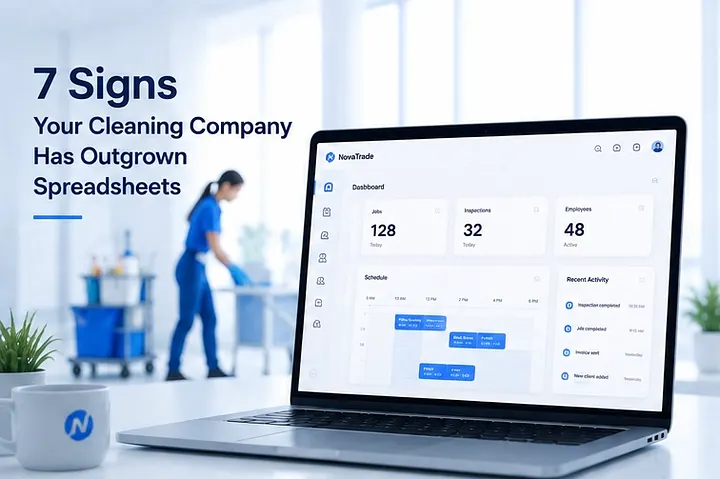
The tools that helped you start your business may now be holding it back.
Every successful business reaches a point where the systems that once supported growth begin limiting it. For many cleaning companies, that moment arrives quietly. There isn't a dramatic failure or a single major mistake. Instead, small inefficiencies begin to appear more frequently, daily operations become harder to manage, and routine tasks consume more time than they used to.
When your company is just getting started, spreadsheets, shared calendars, messaging apps, and manual reports are often enough to keep everything running. They're familiar, inexpensive, and easy to use. But as your business grows, the same tools gradually become disconnected pieces of a much larger operational puzzle.
Growth doesn't simply mean serving more customers. It means coordinating more people, managing more recurring services, handling more communication, and making more decisions every single day. Eventually, success creates a level of complexity that spreadsheets were never designed to handle.
So how do you know it's time to move beyond manual systems?
1. Scheduling Has Become a Full-Time Job
Every cleaning business relies on efficient scheduling. Yet as the number of employees, clients, and recurring services increases, even small changes begin creating a domino effect.
A cleaner calls in sick. A customer requests a different appointment time. Another team finishes earlier than expected. Suddenly, managers are updating calendars, making phone calls, sending messages, and manually adjusting schedules across multiple platforms.
When scheduling consumes hours instead of minutes, it is no longer supporting your business — it is slowing it down.
2. Information Is Scattered Across Too Many Tools
Ask yourself a simple question. Where do you find your customer information? Your employee schedules? Quality inspections? Invoices? Reports?
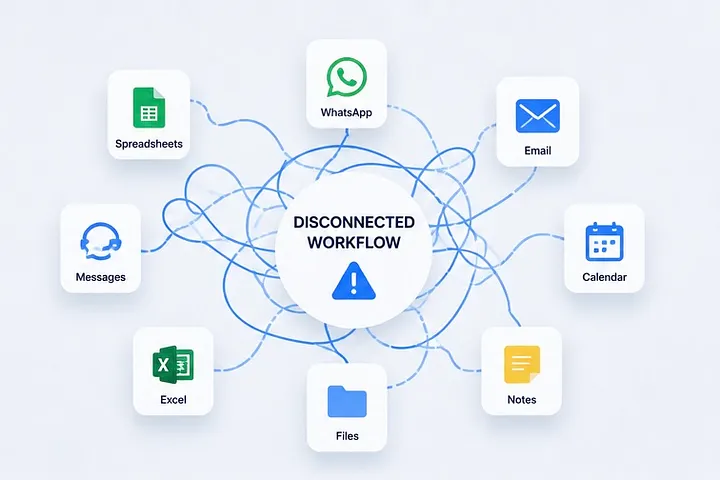
For many businesses, every answer is different. Customer details might be stored inside a CRM, schedules inside a shared calendar, conversations in a messaging app, invoices in accounting software, and reports somewhere inside a spreadsheet. While each application performs its own task well, none of them truly communicate with one another.
The result is an operation where managers spend more time searching for information than acting on it.
3. Your Customers Need Constant Updates
Excellent customer service depends on clear communication.
However, if clients regularly contact your office to ask whether their cleaner has arrived, whether an inspection has been completed, or whether an invoice has been sent, the issue may not be communication itself — it may be visibility.
Modern businesses don't simply respond faster because they have larger teams. They respond faster because information is available instantly. When operational data is connected, both employees and managers always know the current status of every job.
4. Reporting Takes Longer Than It Should
Business decisions should be based on accurate information, not on assumptions.
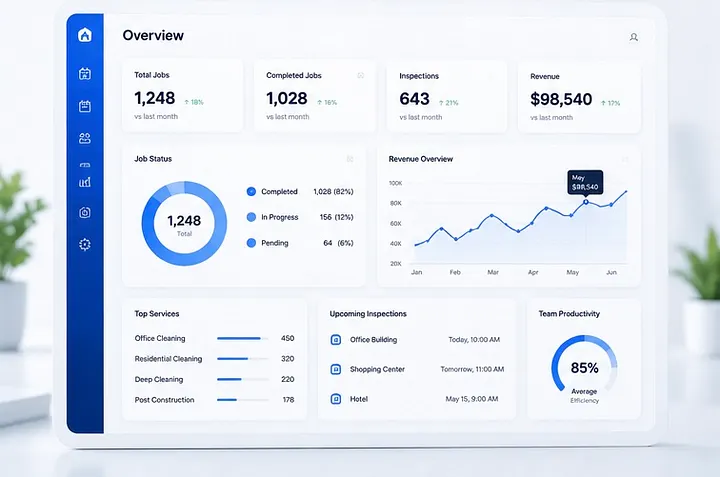
Yet many growing companies still spend hours collecting data from multiple systems before they can prepare a weekly report, review employee performance, or understand revenue trends.
Reports shouldn't require manual work. They should be generated automatically, allowing managers to spend their time analyzing results instead of compiling spreadsheets.
5. Maintaining Quality Becomes More Difficult
As businesses grow, maintaining consistent service quality becomes increasingly challenging.
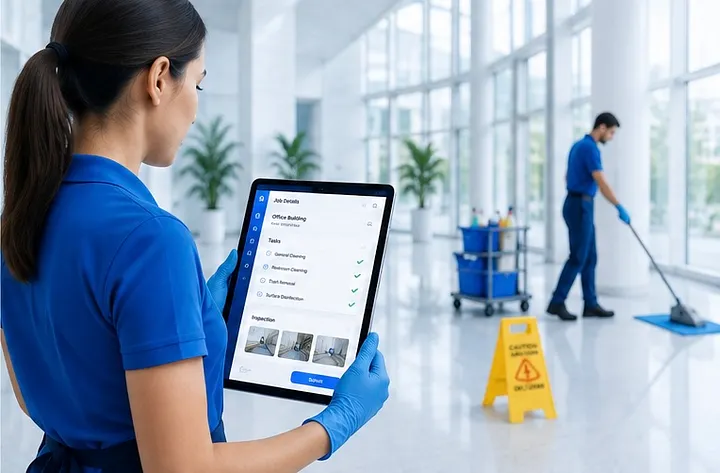
Managers need to know whether every inspection has been completed, whether photos have been uploaded, whether customer feedback has been received, and whether recurring standards are being met across every location.
Without a structured quality management process, maintaining consistency becomes dependent on memory rather than reliable systems. For businesses built on trust, that's a risk few can afford.
6. Managers Spend More Time Organizing Than Leading
Perhaps the clearest warning sign appears when experienced managers begin acting more like administrators.
Instead of supporting employees, solving customer issues, improving service quality, or planning future growth, they spend their days updating spreadsheets, coordinating schedules, searching for information, and correcting avoidable mistakes.
Leadership creates value. Administration simply consumes time. Technology should reduce administrative work — not increase it.
7. Growth Feels More Stressful Than Exciting
Growth should be something every business celebrates. Unfortunately, for many cleaning companies, every new contract also brings additional complexity.
More customers require more scheduling. More employees require more coordination. More recurring services require more reporting.
Without the right operational systems, success begins to feel overwhelming rather than rewarding. When growth consistently creates stress instead of opportunity, it is often a sign that your business has outgrown the tools it once relied on.
Building Systems That Grow With Your Business
The most successful cleaning companies aren't necessarily those with the largest teams or the biggest customer base. They're the businesses that invest in operational systems capable of supporting long-term growth.
Instead of relying on disconnected applications, they create connected workflows where scheduling, customer management, workforce coordination, quality inspections, reporting, finance, and communication all work together within one platform. This not only reduces administrative work but also improves visibility, strengthens collaboration, and allows leaders to make faster, more informed decisions.
Growth becomes significantly easier when your technology grows alongside your business.
Looking Ahead
Every business eventually reaches a point where continuing to work the same way becomes more expensive than embracing change.
Recognizing that moment is often what separates companies that continue growing from those that struggle with increasing operational complexity.
At NOVATRADE SOLUTIONS, we believe cleaning companies deserve software built specifically for the way they work — not generic tools adapted from other industries. By bringing operations into one intelligent platform, businesses gain the clarity, efficiency, and flexibility they need to grow with confidence.
About NOVATRADE SOLUTIONS
NOVATRADE SOLUTIONS develops AI-powered software designed exclusively for cleaning companies.
Our platform combines scheduling, workforce management, customer relationships, quality control, finance, reporting, and intelligent automation into one connected ecosystem. By replacing disconnected tools with streamlined workflows, we help cleaning businesses simplify operations, improve efficiency, and build a stronger foundation for long-term growth.
Find out which configuration fits your company
Answer a few questions about your business. We will review your processes and prepare a proposal with the right features, an implementation plan and pricing.
Find your configuration